


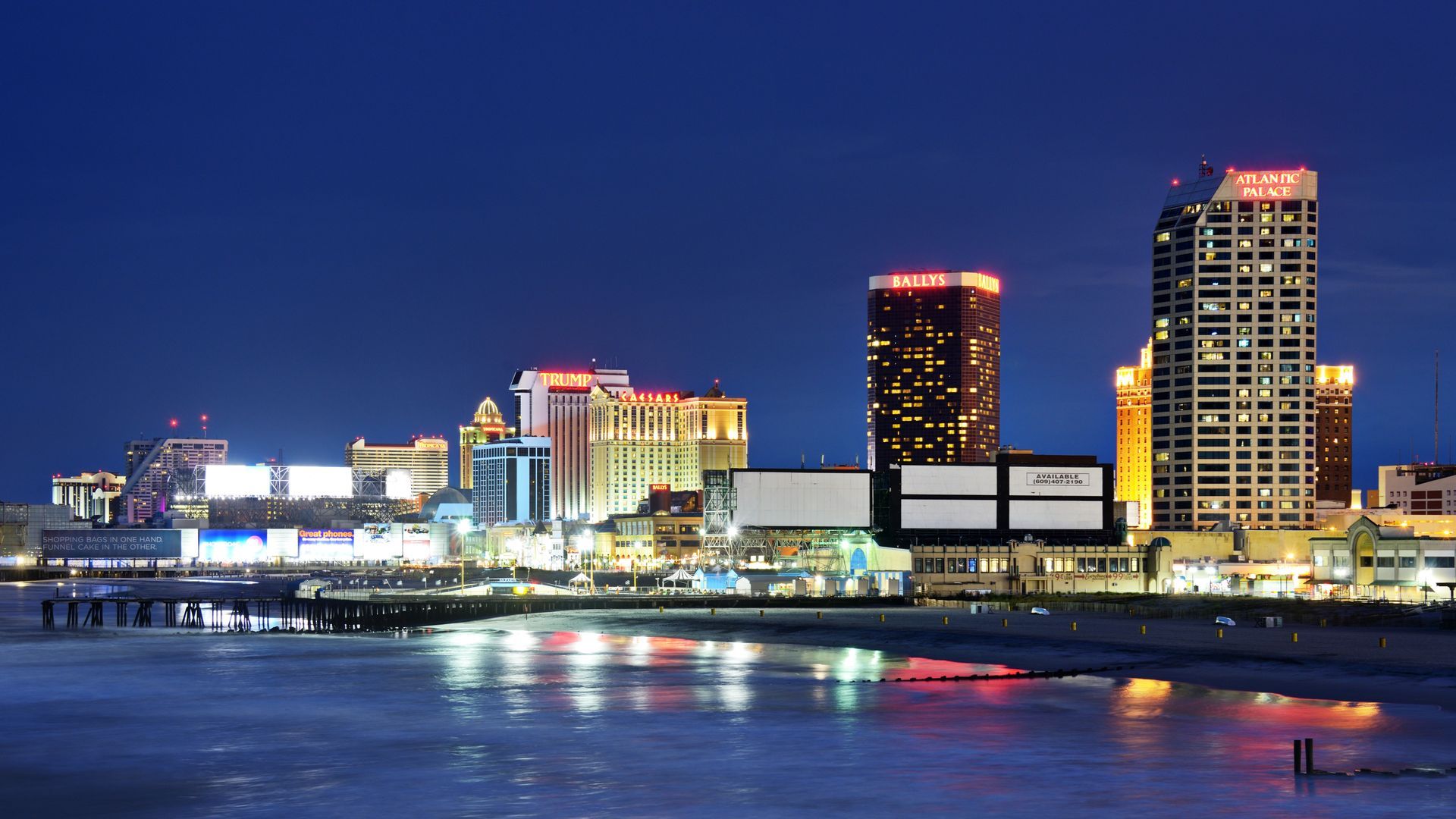
Atlantic City’s Steel Pier is being offered for sale at $85 million, and it is the kind of commercial real estate opportunity that requires a buyer to look far beyond the headline price. At first glance, it may appear to be an amusement park on the Boardwalk. But Steel Pier is much more than that. It is an operating business, a historic Atlantic City landmark, a major oceanfront structure, a recognized entertainment destination, and a property with unusual waterfront rights and potential future redevelopment considerations. For the right investor, developer, hospitality group, entertainment operator, or capital partner, Steel Pier may represent a rare opportunity. But the real question is not whether the property is important. It clearly is. The question is whether the current operation, future capital needs, regulatory requirements, coastal risks, and possible redevelopment opportunities can support an $85 million acquisition. That is where commercial real estate becomes more interesting than the listing price. A Price History That Gets Attention Steel Pier’s current asking price has generated understandable attention. The current ownership group reportedly purchased the property for approximately $4.25 million in 2011. The ownership group had been involved with the pier’s amusement operations before acquiring the property, but the 2011 transaction reportedly brought ownership of the pier structure, buildings, and Steel Pier name under the family’s control. Today, Steel Pier is listed for $85 million. The property was also reportedly appraised at approximately $87 million in 2025. Those numbers are remarkable. A purchase around $4.25 million in 2011 compared with an $85 million asking price today naturally leads people to focus on appreciation. But commercial real estate is rarely that simple. Over the past 15 years, the property did not simply sit and increase in value. Capital was invested. The amusement operation continued. Improvements were made. Major attractions were added, including the 227-foot Observation Wheel that opened in 2017. The property continued to operate as a seasonal entertainment destination in one of the most visible locations in Atlantic City. The current value is not just tied to the original purchase price. It reflects the business operation, the real estate, the oceanfront setting, the physical improvements, the Steel Pier brand, the Boardwalk location, and the potential for future uses that may be evaluated by a buyer. That is why purchase price, appraised value, asking price, replacement cost, and market value should never be treated as the same number. An appraisal is an opinion of value based on market information, assumptions, property conditions, and analysis at a certain time. An asking price is the seller’s position. Market value is ultimately determined by what a qualified buyer will pay after evaluating the income, risks, capital requirements, financing, and future potential of the asset. What Does an $85 Million Buyer Receive? Steel Pier is located directly on the Atlantic City Boardwalk, across from the Hard Rock Hotel and Casino. The property is reported to encompass approximately 5.2 acres extending over the Atlantic Ocean. The pier is approximately 150 feet wide and 965 feet long, and it is described as a steel-reinforced concrete structure anchored approximately 90 feet into bedrock. It reportedly remained intact through Superstorm Sandy in 2012, an important fact for a prospective owner evaluating a major coastal structure. The offering reportedly includes the existing amusement operation, rides and games, food and beverage components, a helipad, and an approximately 40,000-square-foot building at the Boardwalk entrance. The entrance building includes a sky bridge with access to the neighboring Hard Rock convention level through an easement. That access is more meaningful than it may first appear. In commercial real estate, access, visibility, circulation, and connectivity can all influence value. A sky bridge connecting to a major casino hotel and convention-level area could be relevant to future event, hospitality, food and beverage, entertainment, or mixed-use concepts. A buyer is not simply purchasing an amusement park. A buyer is acquiring an operating business, an oceanfront location, a physical structure, a recognized brand, an established Boardwalk presence, and a collection of rights and potential opportunities that must be carefully evaluated. The Riparian Grant Requires Careful Review One of the most interesting aspects of the offering is the reported perpetual riparian grant associated with the area offshore from the existing pier. Public reporting indicates that the grant permits an extension of the pier up to approximately 2,850 feet into the Atlantic Ocean, while the existing pier is approximately 965 feet long.[inquirer +1] However, this should not be interpreted as a guaranteed right to build or develop an additional 1,885 feet of pier area. A riparian grant may be important, valuable, and strategically significant, but it is not the same thing as an approved development plan or guaranteed buildable area. The exact legal description, title status, boundaries, terms, transferability, and continuing validity of the grant would need to be reviewed by qualified legal and title professionals. Even if the grant provides an interest or right relating to submerged lands, any future expansion would still be subject to current New Jersey coastal regulations, municipal land-use requirements, NJDEP review, engineering feasibility, environmental analysis, structural design, financing, insurance requirements, and all necessary federal, state, and local approvals. The difference matters. A property right is not automatically a development approval. The riparian grant may offer long-term strategic value to a future owner. It may create a potential area for future consideration. But a prudent buyer should not assign guaranteed development value to any possible extension until real estate counsel, land-use professionals, coastal engineers, environmental consultants, surveyors, and title professionals have reconciled the grant with current regulations and the actual ability to obtain approvals. New Jersey’s coastal regulations separately govern development on existing ocean piers. Those rules include requirements related to evacuation planning, public access, height, setbacks, permitted uses, and the treatment of ocean-pier structures. Coastal Rules and Development Reality The prior approvals and permits associated with Steel Pier are another important part of the story. The property has reportedly had earlier approvals and permits connected to a condo-hotel and entertainment complex. These approvals were never carried out. That history may be helpful because it demonstrates that substantial redevelopment concepts have been considered for the site in the past. But old approvals should not be treated as current approvals. A buyer would need to determine whether any prior approvals remain valid, whether they expired, whether they can be extended, whether they can be transferred, whether they require amendments, and whether the project concept would still comply with current zoning, building, floodplain, coastal, environmental, and public-access requirements. Current reporting describes Steel Pier as having zoning that supports hotel, entertainment, and commercial redevelopment. That creates a broad starting point for a future buyer, but zoning is only one piece of the development equation. New Jersey’s coastal rules identify Steel Pier as one of the limited existing ocean piers subject to specific state standards. Development on the pier must include an evacuation plan approved by the Atlantic City Office of Emergency Management. The rules also require at least 50 percent of the total floor area of a building on the pier to be dedicated to publicly accessible, non-casino entertainment and recreation. The rules generally limit building height on existing ocean piers to 100 feet above the Boardwalk deck surface. Amusement rides and certain decorative elements may reach up to 200 feet. Within 100 feet of the Boardwalk property line, structures are generally limited to 50 feet above the Boardwalk deck. There are also setback requirements at the seaward end of the pier. Public access is another important factor. The rules require pedestrian access along the beach beneath the pier where feasible, beach access points, public open space at the seaward end, side walkways, signage, restroom and changing facilities near the Boardwalk connection, and other public-use features. Parking is prohibited on the pier itself. The regulations also address residential development. Residential development on existing ocean piers is generally prohibited unless FEMA grants a waiver of strict compliance with the municipal flood-damage-prevention ordinance for a hotel over the water. This does not automatically rule out all hotel, condo-hotel, or hospitality-related concepts, but it means a buyer must carefully distinguish between a possible vision and a legally achievable project. An Operating Business and a Future Opportunity Steel Pier can be viewed from two different perspectives. The first is the existing business. A buyer may acquire an active amusement and entertainment operation with rides, games, food and beverage income, a recognizable name, seasonal traffic, and a major Boardwalk presence. The existing business may offer immediate revenue, brand recognition, and a foundation for continued operations. The second is the longer-term opportunity. Depending on what can be approved and economically supported, a future owner may consider expanded amusement uses, entertainment, food and beverage, event space, music or performance venues, hospitality concepts, resort-related uses, or other commercial development. But the existing operation and the future opportunity must be underwritten separately. The income from rides, games, food and beverage, events, and other current operations needs to be reviewed based on actual financial performance. The future development potential needs to be tested through zoning analysis, coastal permitting, engineering, environmental review, market demand, construction costs, financing, insurance, and a realistic timeline. A buyer should not value every potential use as though it is already approved, financed, built, and operating. The successful buyer will likely be someone who understands the difference between possibility and probability. What a Buyer Must Underwrite A serious buyer evaluating an $85 million acquisition of Steel Pier would need to go well beyond the purchase price. The first area is the existing operating business. What are the revenues from rides, games, food and beverage, events, sponsorships, admissions, and other sources? How seasonal is the business? What does normalized net operating income look like after labor, management, maintenance, insurance, utilities, marketing, repairs, reserves, and capital expenditures? The second area is the condition of the physical asset. What is the condition of the pier structure, supports, deck, building systems, sky bridge, utilities, helipad, rides, and other infrastructure? What deferred maintenance exists? What capital expenditures should be expected over the next five, ten, and twenty years? Owning a structure over the Atlantic Ocean requires a long-term capital plan. Saltwater exposure, wind, storms, corrosion, insurance, structural inspections, emergency planning, and operational disruptions need to be built into the underwriting. The third area is redevelopment potential. What can legally be built or modified today? Which permits, approvals, rights, easements, and agreements transfer with the property? What additional approvals are required? How long could the approval process take, and what would it cost before construction even begins? The fourth area is market demand. Is there enough demand for expanded hospitality, event space, entertainment, food and beverage, or a mixed-use concept? What competition exists from Atlantic City’s casinos, hotels, restaurants, entertainment venues, and Boardwalk attractions? What revenue assumptions are realistic rather than optimistic? Finally, the buyer must evaluate the all-in basis. An $85 million acquisition price is only the beginning. Closing costs, legal fees, title review, engineering, environmental reports, architectural work, permits, financing costs, insurance, reserves, capital improvements, construction costs, carrying costs, and contingency funds can materially increase the total investment. The question is not simply whether Steel Pier is worth $85 million. The better question is whether the property can produce a sufficient return after accounting for the full acquisition cost, operating risk, future capital needs, and the real probability of achieving a future business or redevelopment plan. A Rare Asset Requires a Sophisticated Buyer Steel Pier is one of the most unusual commercial real estate opportunities on the East Coast. It is a historic landmark with a nationally recognizable name. It has a highly visible Atlantic City Boardwalk location, an active business, an oceanfront structure, proximity to Hard Rock, existing connectivity through a sky bridge, and reported rights and prior approvals that deserve detailed investigation. Its value is not limited to the amusement rides operating today. It may lie in the combination of the existing business, location, brand, physical infrastructure, ocean-related rights, and future possibilities that can survive careful legal, regulatory, financial, engineering, and market due diligence. At the same time, it is not a simple development deal. A prospective buyer must be disciplined. The riparian grant should be verified, not assumed. Prior approvals should be confirmed, not marketed as current entitlements. Revenue should be analyzed, not estimated from foot traffic alone. Coastal risk should be budgeted, not ignored. And every future concept should be tested against the rules, the cost, and the marketplace. For the right buyer, Steel Pier may become a generational Atlantic City asset. For the wrong buyer, or at the wrong basis, it could become an expensive example of why commercial real estate is never just about the number on the listing. If you are an investor, developer, hospitality operator, entertainment group, or capital partner evaluating commercial real estate opportunities in Atlantic City, South Jersey, or the broader tri-state region, I welcome the conversation. The best opportunities often require looking beyond the headline and understanding the income, rights, risk, location, and long-term potential behind the property. This article is intended for general market commentary only and is not legal, title, zoning, engineering, environmental, appraisal, tax, or investment advice. Prospective buyers should independently verify all property information, financial information, permits, approvals, zoning, easements, riparian rights, title matters, and regulatory requirements through qualified professionals before making an investment decision.

What if the first house you walk into is the one? The location is right. The kitchen is beautiful. The backyard is exactly what you imagined. Your kids are already choosing their bedrooms. Before you know it, you are emotionally invested and ready to write an offer. There is only one problem. You do not have a preapproval. You are not completely sure what you qualify for. You have not calculated the taxes, homeowners insurance, mortgage insurance, closing costs, or what the actual monthly payment will look like. More importantly, you have not decided what payment fits comfortably into the life you want to live after you buy the house. Know before you go. As a real estate professional, sometimes my job is to be the devil’s advocate and say, “Don’t jump in just yet.” That is not because I do not want to show you houses. It is because opening doors is only one small part of my job. Educating you, helping you understand the numbers, protecting your time and money, and helping you use real estate strategically to build wealth are much more important. Buyers Are Looking Before They Are Financially Ready Recent research shows exactly why this conversation matters. Zillow’s 2025 Consumer Housing Trends Report found that 67% of prospective buyers had already looked at homes for sale online and 39% had attended an open house or private tour, yet only 34% reported getting prequalified or preapproved. Among prospective first-time buyers, only 26% had done so. Even more interesting, only about half of prospective buyers correctly understood what mortgage preapproval actually means. Research on buyers who successfully completed purchases tells a different story. Zillow found that 55% of successful buyers obtained their mortgage preapproval within their first three homebuying activities. That does not prove that preapproval alone causes someone to successfully buy a home. But it does show something important: successful buyers tend to bring financing into the process early. And today’s market makes preparation even more important. According to the National Association of REALTORS®, first-time buyers represented only 21% of recent purchasers, the lowest percentage recorded since NAR began tracking the statistic in 1981. The median age of a first-time buyer has climbed to 40. This is not a market where I want my buyers guessing. What You Qualify For and What You Should Spend Are Two Different Numbers Suppose a lender says you qualify for a $700,000 home. Does that mean we should immediately start looking at $700,000 houses? Not necessarily Maybe you could comfortably make that payment and this is your long-term dream home. You might decide that stretching your budget makes sense. But perhaps you tell me, “Yes, I can qualify for $700,000, but I really want to stay around $550,000. I want money available for travel, my children’s education, investments and retirement.” Or perhaps you want $50,000 left after closing because the house needs a new kitchen. Maybe you want a pool, Jacuzzi, addition, new furniture or other improvements. Those conversations matter. Your lender determines what you may be able to qualify for . Together, we need to understand what you can comfortably live with . And the mortgage principal and interest are not the entire number. Freddie Mac reminds buyers to account for property taxes, homeowners insurance, private mortgage insurance when applicable, HOA fees and other ownership expenses. That is why I want you to understand the monthly payment, cash needed to close and what you will still have available after you receive the keys. Don’t Become House Rich and Life Poor Imagine two families who can both qualify for a $700,000 home. Family A purchases at the top of its qualification range. Almost every available dollar goes toward the down payment, closing costs and monthly housing expense. Family B purchases a $550,000 property even though it could qualify for more. It keeps additional cash reserves and eventually uses some of that capital toward another investment property. Over time, that second property produces rental income, builds equity as the mortgage is paid down and potentially appreciates. Eventually, instead of owning one property, the family may own two income-producing or appreciating assets. That does not mean Family B automatically made the better decision. Family A may value its dream home more than acquiring another investment, and that is perfectly reasonable. The point is that they made two different financial decisions. Real wealth building begins when you understand that purchasing power and financial strategy are not the same thing. Interestingly, home buyers themselves continue to recognize this long-term value. In NAR’s buyer research, 79% said they viewed purchasing a home as a good financial investment. But real estate builds wealth best when you can afford to hold it, maintain it and still have room in your financial life for emergencies, opportunities and future goals. Preparation Doesn’t Slow You Down. It Helps You Move Faster. Now imagine we did everything before we started looking. Your lender reviewed your income, credit, assets and debts. We know your price range. We know approximately how taxes and insurance affect the payment. We discussed your cash to close. We know how much you want left in reserves. And, most importantly, you know your comfortable number. Then we walk into that perfect house. Instead of asking, “Can we afford this?” We can ask, “Is this property worth what we are willing to pay for it?” That is a completely different position from which to negotiate. There is an old saying often attributed to Benjamin Franklin: “By failing to prepare, you are preparing to fail.” I would put it a little differently when it comes to buying real estate: Preparation isn’t about stopping you from buying. It is about preparing you to buy well. So when I ask for a preapproval before we seriously begin looking, please do not see it as a barrier between you and the house you want. I am not trying to make you prove that you can buy a home before I open the door. I am trying to make sure that when I open the right door, you are financially educated, strategically prepared and ready to walk through it. KNOW BEFORE YOU GO. Before you fall in love with a house, know your numbers. Because the goal isn’t simply to buy a home. The goal is to make a real estate decision today that still makes financial sense tomorrow.

The best commercial real estate opportunity in 2026 may not be in the asset class everyone is chasing. Popularity and profitability are not the same thing. In a year when transaction activity is recovering but borrowing costs remain elevated, returns are increasingly income driven. That makes asset selection and active management more important than simply owning the right property type. CBRE expects U.S. commercial real estate investment volume to rise about 16% in 2026 to roughly $562 billion, approaching the average annual volume seen from 2015 to 2019. Yet cap rates have been broadly flat through the first half of 2026 despite volatile Treasury yields, signaling pricing uncertainty and a split in sentiment by asset class and region. This is the environment where smart money wins. It is not about picking the hottest category. It is about finding assets where price, demand, cash flow, replacement cost and future potential are most misunderstood by everyone else. The Big Picture: Recovery Without a Broad Rally Investors are back, but they are selective. Bidding activity posted its strongest monthly improvement in a year by mid 2026, with capital flooding into retail and industrial even as multifamily remained the weakest sector for bidding and credit activity. The implication is clear. Wealth is created when you buy the right asset, in the right market, at the right basis, with the right financing, and operate it well enough to allow time, income and appreciation to work in your favor. That is why sophisticated investing should begin with better questions. What am I paying relative to replacement cost. Where will NOI growth come from. How much future supply can enter this market. What capital expenditures am I inheriting. How secure are the tenants producing the revenue. What does my downside look like if my assumptions are wrong. Industrial and Logistics: Standout Breadth, but Selectivity Matters ndustrial was the clear standout in the second quarter of 2026. Median price per square foot rose 13.2% year over year, median deal size increased 18.4% , and total dollars invested grew 26%, overtaking multifamily as the largest share of invested dollars for the quarter. Investment reached $33 billion in the quarter, up 28% year over year, marking the eighth consecutive quarter of double digit growth. The sector posted widespread growth across individual asset acquisitions, not just portfolio sales. Fundamentals support the story. National industrial vacancy fell to about 6.8%, leasing surged 49.4% year over year, net absorption hit 99.1 million square feet, and asking rents rose to $10.45 per square foot. The investment lesson is about selectivity. Modern logistics properties in strategic corridors with clear heights, trailer parking and modern loading capabilities are outperforming. Older shallow bay warehouses and flex properties lag. Industrial may remain one of the strongest long term commercial property sectors. But investors should be careful about paying yesterday’s premium for today’s normalized growth. Retail: The Quiet Outperformer With Tight Supply For years, investors heard that e-commerce would destroy brick and mortar retail. Instead, retail adapted. The weakest malls and obsolete shopping centers experienced disruption, but grocery stores, restaurants, medical users, fitness concepts, discount retailers, beauty services and countless service businesses cannot simply be replaced by an Amazon delivery truck. Globally, retail led first half 2026 investment growth, up 38% year over year. In the U.S., retail investment rose 16% year over year to $18 billion in the second quarter. U.S. retail asking rents reached $24.79 per square foot, up 2.4% year over year, with availability around 4.9% and four straight quarters of positive net absorption. Value trends reinforce the shift. Green Street reports mall values up 12% over the past year, now 3% above the 2022 peak, and neighborhood shopping centers up 9%. The smart money angle is straightforward. Grocery anchored, open air centers and necessity based tenants such as discount, off price, quick service and fast casual restaurants benefit from limited new supply and durable demand. Sometimes boring real estate is excellent real estate. Hotels: Operational Leverage in a Supply Constrained Cycle Hotels deserve to be analyzed differently from almost every other commercial property type. When you acquire an apartment building, tenants generally sign leases for months or years. A hotel effectively leases its rooms one night at a time. That creates tremendous upside when operations are strong and tremendous downside when they are not. Hotel fundamentals strengthened during 2026. Hotel demand rose 1.7% year over year in the second quarter while supply grew only 0.4%. Occupancy increased 0.8 percent, average daily rate rose 4.4%, and revenue per available room increased 5.7%. CBRE’s midyear forecast projects approximately 2.5% RevPAR growth for full year 2026, supported by strengthening business transient and group travel. Hotel construction has been declining, and inventory is expected to grow only about 0.7% annually over the next three years, creating a supply constraint that can support pricing. Performance is segmented. Luxury hotel RevPAR is forecast to increase approximately 5.2% , while midscale growth is expected to be only 0.7% and economy hotels are projected to decline 0.6%. This is where experienced hotel investors can sometimes find extraordinary opportunities. A hotel producing $1 million in annual room revenue under weak management might have substantially different value under an operator capable of producing $1.3 million or $1.5 million from the same real estate. With hotels, you are not simply buying real estate. You are buying real estate plus business plus management plus brand plus location. That complexity creates risk, but it can also create opportunity. Data Centers: The Strongest Demand Story and the Highest Bar to Entry If commercial real estate has a celebrity asset class in 2026, it is probably the data center. Artificial intelligence, cloud computing and rapidly increasing digital infrastructure requirements have produced extraordinary demand for capacity. The numbers are remarkable. CBRE reports that primary market North American data center vacancy fell to a record low 1.4 percent during the first half of 2026, despite total supply increasing 33.7% year over year. Approximately 7,481 megawatts of capacity was under construction, up 24.8% , and more than 80% of that capacity had already been preleased. CBRE estimates that the remaining available capacity represents approximately six months of demand at the current absorption rate. CBRE’s investor survey also found that more than half of surveyed investors expected to increase their capital allocations to data centers during 2026. That sounds like the obvious place to invest. And that is precisely where investors need to be careful. A data center is not simply an industrial building filled with computers. Power is becoming one of the most valuable pieces of real estate infrastructure in America. Developers are increasingly seeking enormous sites, sometimes 125 acres or more, with access to 250 megawatts or significantly greater electrical capacity. Power delivery timelines in certain markets can stretch for years. CBRE estimates construction costs for the most demanding facilities at approximately $14 million to $16 million per megawatt. For the typical private commercial investor, buying land because data centers are hot without verified power capacity may be speculation rather than investment. The real opportunity may sometimes be one step removed from the data center itself. Strategically located powered land, utility infrastructure, housing, hotels, industrial facilities and service businesses in markets experiencing billions of dollars of data center construction can offer compelling risk adjusted returns. Multifamily: Still the Most Targeted, but Performance Is Diverging If commercial real estate investing were a popularity contest, multifamily would probably still win. CBRE’s 2026 North American Investor Intentions Survey found that 74% of U.S. investors were targeting multifamily, compared with 37% targeting industrial and logistics, 27% targeting retail and 16% targeting office. There are legitimate reasons for that enthusiasm. People will always need somewhere to live, homeownership remains difficult for many households, and the enormous wave of apartment construction that pressured rents in several markets is beginning to slow. The National Association of REALTORS reported in September that multifamily absorption had finally exceeded new deliveries for the first time in nearly five years. Vacancy was beginning to ease and rent growth was gradually strengthening. But the recovery is not uniform. Class A properties are benefiting most clearly, Class B remains relatively resilient, while some Class C properties continue to lose tenants. Certain oversupplied Sun Belt markets also remain under pressure. Yet bidding and credit activity have been weakest in multifamily, and Green Street notes apartments were the only niche among twelve with no value gains over the past year. That creates an important investment lesson. Multifamily may be an excellent long term asset class, but purchasing a 200 unit apartment complex simply because everyone needs housing is not an investment strategy. If you overpay, underestimate insurance and property taxes, assume aggressive rent growth or purchase into a market with thousands of competing units coming online, even an excellent asset class can become a mediocre investment. The better question may be: What is the relationship between basis, replacement cost, rent growth, future supply and realistic operating expenses. Office: Two Markets in One: Class A Tightening, Lower Tiers Distressed Few commercial real estate sectors demonstrate the danger of generalization better than office. The popular narrative has been that remote work destroyed office real estate. There is certainly truth behind the disruption. Hybrid work permanently changed space requirements, older buildings have lost tenants, refinancing has become difficult and billions of dollars of office valuations have been reset. But that does not mean every office property is experiencing the same reality. Office vacancy fell to 18.3% in the second quarter of 2026, down 30 basis points, with asking rents up 2.6% year over year to $37.58 per square foot and leasing at 62.4 million square feet. Stabilization is concentrated in Class A. Class B buildings remain under pressure even as some obsolete inventory is removed, while Class C properties continue losing tenants. CBRE similarly expects greater scarcity of prime office space as 2026 progresses, with companies increasingly competing for newer, better located and highly amenitized buildings. This is precisely where contrarian investors sometimes find opportunity. When an entire sector becomes unpopular, investors occasionally price everything as though it carries the same risk. It does not. However, purchasing distressed office simply because it is cheap can be dangerous. A $30 million building purchased for $12 million is not necessarily a bargain if it requires another $20 million of capital and there is insufficient tenant demand to fill it. Cheap and undervalued are not the same thing. So Where Is Smart Money Actually Moving? The answer is more complicated and more interesting than choosing one winner. Multifamily remains the institutional favorite and its supply demand picture is improving. Industrial continues to benefit from powerful structural trends, although investors must become more selective. Retail may be the quiet outperformer, supported by unusually low availability, limited construction and necessity based tenants. Hotels offer operational upside that traditional leased real estate cannot easily replicate, but management quality matters enormously. Office may contain some of the deepest distress in commercial real estate while simultaneously experiencing tightening conditions for high quality Class A space. And data centers represent perhaps the strongest structural demand story in the market, accompanied by enormous capital and infrastructure requirements. Which brings us back to the original question. What if the best commercial real estate opportunity is not in the asset class everyone is chasing. Imagine two properties. The first is in the hottest asset class in America. Investors are competing aggressively for it, the seller knows exactly how desirable it is, the cap rate is compressed and every optimistic assumption is already reflected in the price. The second property belongs to an asset class investors are overlooking. It has durable tenants, limited competing supply, contractual rent increases, strong replacement cost economics and dependable cash flow, but fewer buyers are pursuing it. Which one is actually the better investment. That is why sophisticated commercial real estate investing should rarely begin with, What asset class should I buy. It should begin with better questions. What am I paying relative to replacement cost. What is my true going in and stabilized yield. Where will NOI growth come from. How much future supply can enter this market. What capital expenditures am I inheriting. How secure are the tenants or customers producing the revenue. How difficult would it be to replace this property’s income. What happens if financing costs stay elevated longer than expected. And, most importantly, what does my downside look like if my assumptions are wrong. Because commercial real estate does not create wealth simply because you bought multifamily instead of retail, industrial instead of office, or a data center instead of a hotel. Wealth is created when you buy the right asset, in the right market, at the right basis, with the right financing, and operate it well enough to allow time, income and appreciation to work in your favor. The most popular asset class may offer opportunity. But the best investment is often the one where price, demand, cash flow, replacement cost and future potential are most misunderstood by everyone else.